- No products in the cart.
 0480343843
 Showroom Available


Many dining rooms appear well-arranged, yet still feel slightly off. Lighting is often the reason. Pendant lights above a dining table do more than brighten the space. They shape the mood, anchor the dining area, and provide functional lighting that guides people toward the place where conversations take place.
The right pendant can elevate your dining room, especially in Australian homes with open-plan layouts in cities like Sydney, Melbourne, and Brisbane.
But the way you place the light matters. Height, size, spacing, and the number of pendants all influence how comfortable the room feels. Too high, and the light disconnects from the table. Too low, and it interrupts your view. If the scale is wrong, the whole room looks unbalanced.
When you get the placement right, the dining area works for everyday meals, family gatherings, or quiet nights at home.
This guide shows you how to choose the correct height, size, and placement so your pendant lights fit your table and your home.
Key Factors That Determine Pendant Placement Above a Dining Table
A few key elements determine where your pendant light should be placed, and each one impacts how the dining area feels and functions.
These factors help you set the right height, spacing, and scale so the light works for everyday meals and fits the room comfortably.
Ceiling Height
Ceiling height shapes how low your pendant lights can hang over the dining table. The NCC sets a 1.83 m minimum floor-to-fixture clearance, so the higher your ceiling, the more flexibility you have with the drop.
If your ceiling height is 2.4 m or lower, measure from the table surface up to find a drop range between 75–90 cm. This step prevents glare and keeps the light within a natural sightline.
Dining Table Size and Shape
The size and shape of your dining table guide where the pendant sits and how it lines up with the table surface. Longer rectangular tables need a centred layout that covers the full length, while round tables suit a single pendant placed in the middle.
This factor helps you match the pendant to the table so the light feels natural when you sit down, and the dining space stays easy to use.
Pendant Height Above the Table
The height you plan to hang your pendant plays a role in how the light feels when you sit at the dining table. A lower drop brings the light closer to the table surface, while a higher drop opens up the dining space.
This starting point helps you work out what will feel right before you measure anything, because different tables, rooms, and light fixtures need different hanging heights.
Pendant Light Size and Style
The size and style of your pendant shape how the light sits over your dining table, how much of the table surface it covers, and how well it supports the overall aesthetic of the room. A wider pendant spreads more light to illuminate the dining area, while slimmer designs work better for small rooms and narrow tables.
Common materials used in Australian dining rooms include glass, brass, matte black metal, timber accents, and linen shades, which also pair well with complementary pieces like table lamps. These materials help match popular local styles such as coastal, contemporary, Scandinavian, and modern minimalist interiors.
How High Should a Pendant Light Hang Over a Dining Table?
The ideal height for a pendant to hang over my dining table is 75–90 cm above the surface, adjusted slightly for your ceiling height and the size of the pendant.
This range keeps the light close enough to brighten the table surface, add a touch of warmth, and still give you clear sightlines across the dining area. It also supports even light distribution during everyday meals without creating glare.
Here’s how to calculate the height correctly:
1. Determine the Ceiling Height First
Start by checking your ceiling height, because this sets the baseline for how high your pendant should hang. Height gives you clear visibility across the table and keeps the pendant out of the way when you stand or sit.
Here’s what works for most Australian homes:
-
For a 2.4 m ceiling: Hang the pendant 75–85 cm above the table. This range keeps the light at a practical height and gives even lighting during meals and daily use.
-
For a 2.7 m ceiling: Aim for a drop of 85–100 cm above the table. The added height helps the pendant stay visually connected to your dining area without sitting too high in the room.
-
For a 3.0 m or higher ceiling: Use a drop of 100–120 cm above the table. This prevents the pendant from looking out of place and ensures the dining table remains the focal point.
Many installers follow this quick formula to check the hanging height:
Pendant drop = ceiling height – table height – clearance above the table
This formula helps you adjust the pendant height with confidence, no matter how high your ceiling is.
|
Ceiling Height |
Recommended Pendant Drop Above Table |
|
2.4 m |
75–85 cm |
|
2.7 m |
85–100 cm |
|
3.0 m + |
100–120 cm |
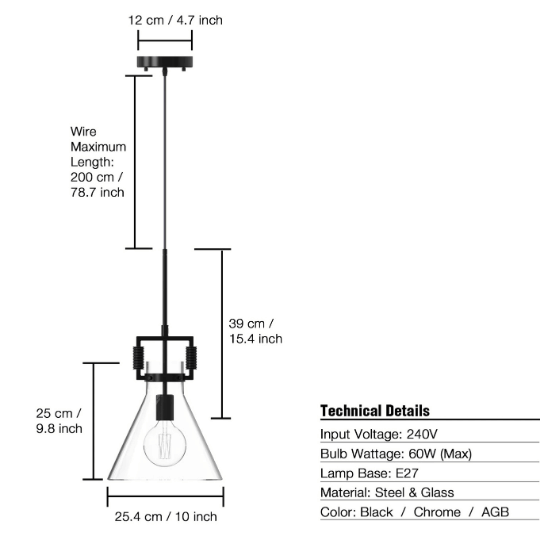
2. Decide on the Number of Lights and Their Placement
Start by choosing how many pendants you want above the dining table, because this shapes the layout and affects how evenly the table surface is lit. A small table usually works well with one pendant placed in the centre. Medium and long tables need two, three or linear pendants so the full dining area stays bright during meals.
When planning more than one pendant, keep all fixtures at the same height to avoid uneven light across the table. Centre the layout with the table to keep the room looking organised when viewed from any angle.
A few simple setups:
- Two pendants sit over each half of the table with equal spacing
- Three pendants follow a centre–left–right layout with consistent gaps
Before fixing anything to the ceiling, mark the positions or hang a light object at the planned height.
3. Standard Distance From the Tabletop
Most dining rooms work well when the pendant hangs about 75–90 cm above the table. This range keeps the light close enough for clear visibility during meals while still giving you a comfortable sightline across the dining table.
A lower height (around 75 cm) creates a focused, cosy feel that suits intimate dinners. A slightly higher drop (closer to 90 cm) suits casual, everyday use and avoids any chance of bumping the light.
You can check the placement quickly:
- When seated, the pendant should sit above your eye line
- When standing, you should look under the shade without tilting your head
If your ceiling is higher than average, raise the pendant a little to keep the proportions right.
4. Spacing Between Pendant Lights
If you're using more than one pendant, the space between them shapes how evenly the table is lit. A simple range that works in most dining rooms is 60 to 80 cm between pendants. This keeps the layout tidy and helps the table surface stay bright from end to end.
The spacing shifts slightly based on how many pendants you use:
-
Two pendants: Place them so each light covers one half of the table without overlapping too much.
-
Three pendants: Keep the distance consistent between all three so the light feels even across the full length.
Real examples to help you make this clearer:
-
1.8 m rectangular table: Two pendants spaced around 70 cm apart usually give steady, even lighting.
-
2.2 m rectangular table: Two 40 cm glass pendants spaced 70–80 cm apart keep the light balanced across the table, especially in coastal-style Australian homes.
-
2.4 m rectangular table: Three pendants spaced 60–80 cm apart help avoid dark patches at the ends.
Protip: Keep the spacing equal across the table so the lighting feels smooth and easy on the eyes.
|
Dining Table Length |
Recommended Number of Pendants |
Ideal Spacing Between Pendants |
|---|---|---|
|
1.5 m – 1.8 m |
2 pendants |
65–75 cm |
|
2.0 m – 2.2 m |
2 pendants |
75–80 cm |
|
2.4 m+ |
3 pendants |
60–80 cm between each |
How Many Pendant Lights Should You Hang Over a Dining Table?
Most dining tables only need a clear setup. Use one pendant for small or round tables, two pendants for medium rectangular tables, and three pendants for long tables over 2.4 m. This keeps the light even across the table and makes the dining area easier to use for everyday meals, while it’s also important to consider how many pendant lights you hang above a kitchen island, especially in open-plan spaces where both areas sit close together.
Here’s how to choose the right number for your table:
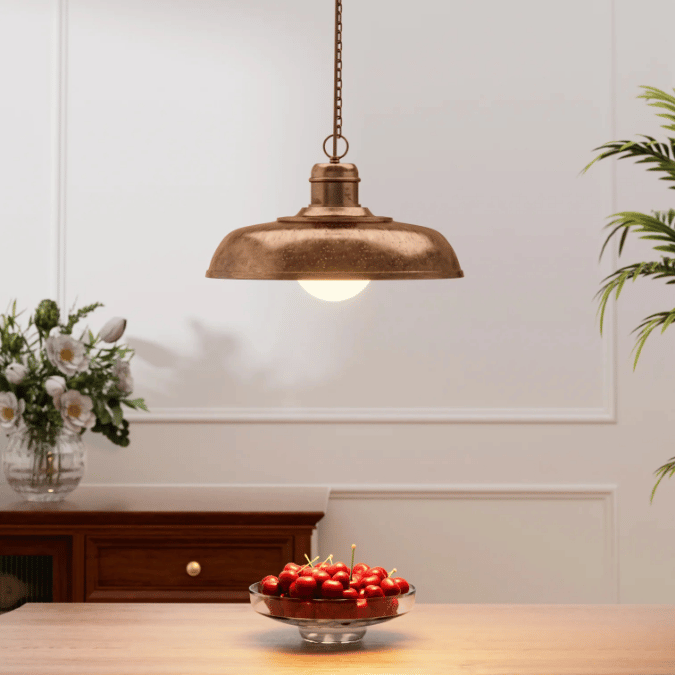
Single Pendant Light over Dining Table
A single pendant works best when your dining table is small or round. It keeps the light centred, gives clear visibility across the table, and suits rooms where you want a clean, uncluttered layout.
Choose this setup if your table seats four people or if the dining space is compact. A good diameter for the pendant is half to two-thirds of your table’s width or diameter. This size lights the table surface properly without overwhelming the room.
This approach also works well with open-shade designs, glass pendants, or fittings that give diffused light that pair well with single pendants.
Two Pendant Lights over Dining Table
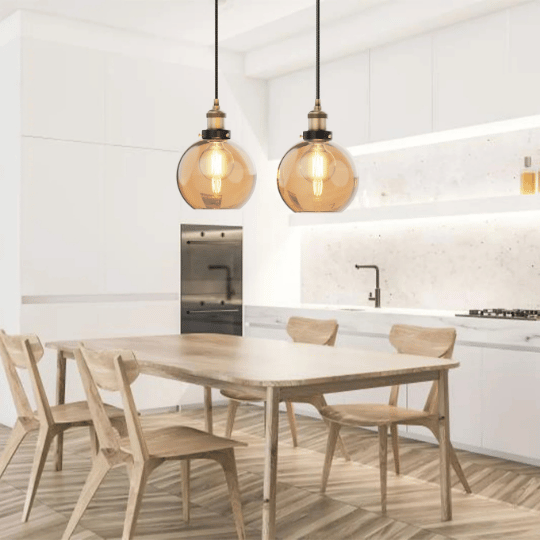
Two pendants work well when your dining table seats six to eight people, and you want clear, even dining room lighting across the whole table surface. This setup suits most medium rectangular tables found in Australian homes and helps you avoid dark spots at the ends of the table.
- A 1.8 m dining table usually fits two pendants spaced evenly, so each light covers one half of the dining area.
- A 2.0 m table often needs two pendants to keep strong task lighting for meals and day-to-day use.
It fits naturally into a wide range of pendant lights, so you can choose the right pendant based on your space and the look you prefer when grouping pendants for balanced lighting across a range of dining room layouts.
Three Pendant Lights over Dining Table
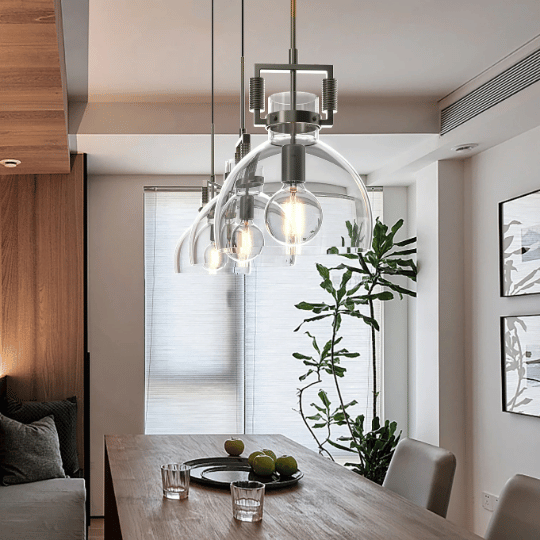
Three pendants work well for long dining tables over 2.4 m, especially if you want steady, even light across the whole table surface. This setup suits large linear tables where a single light or two fixtures would leave the ends of the table dim.
This arrangement is popular when the table is used for big family meals or when the dining room sits in an open-plan space. If you prefer a lighter, modern look, glass pendant lights over dining table setups are a good option because the transparent shade keeps the room feeling open while still giving good light distribution.
Glass, acrylic, and open-frame designs work well when you want the dining area to stay visually open, especially in compact Australian apartments.
Multiple pendant lights over Dining Table
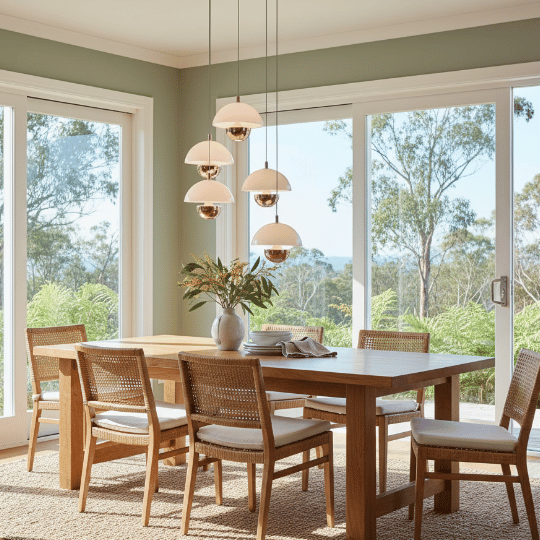
When your table is extra long, or you want a stronger, bold statement, four pendants or a cluster pendant light can give you the coverage you need.
This works well when the dining table extends across a larger room or when you want lighting that runs cleanly across the table without dark gaps. Cluster pendants use several smaller pendants grouped from one point, sometimes at varying heights, to create a feature that blends style and function.
This suits both modern and traditional interiors and works well with tables that need wider lighting coverage. Clusters also fit neatly into a wide range of dining room and lighting solutions, helping you create a setup that fits your room size and the look you want.
What Size Should a Pendant Light Be Over a Dining Table?
The size of your pendant should match the width of your dining table so the light feels proportional and works well during meals. A clear rule you can rely on is choosing a pendant that’s 50–70% of your table’s width.
Pendant lights come in many shapes and styles, so the measurement you use may change. For round or dome pendants, width works best. For linear, oval, cluster, or multi-light designs, use the longest visible dimension as the reference point.
Sizing For Rectangular Tables
A rectangular dining table needs a pendant that fits the shape and lights the full table surface without feeling oversized. This gives enough coverage for the table surface while keeping the light centred and practical for daily meals.
Rectangular tables work well with linear bars, twin pendants, or three-light clusters because these shapes match the table’s length and spread the light evenly.
Here’s how that works in real settings:
-
1.6 m–1.8 m table: A single pendant around 30–40 cm wide, or two smaller pendants spaced evenly across the table. This setup supports steady dining room lighting without leaving dark areas at the ends.
-
2.0 m–2.2 m table: A larger linear pendant or two pendants sized around 30–45 cm each create even light across the table.
- 2.4 m+ long tables: Use three pendants to keep the light spread consistent. Smaller pendants in a row prevent the fixture from feeling heavy and help with even light distribution across the table.
|
Rectangular Table Length |
Recommended Pendant Width |
|
1.6 m – 1.8 m |
30–40 cm |
|
2.0 m – 2.2 m |
30–45 cm |
|
2.4 m+ |
Smaller pendants in a row |
Sizing For Round Tables
A round table works well with a pendant that measures half to about two-thirds of the table’s diameter. This size keeps the pendant proportional and helps the light fall evenly across the table surface.
This approach also makes placement easy, because a single centred pendant naturally suits the shape of the table. Fixtures with soft curves, like glass or dome styles, often give smoother light distribution and reduce shadows during meals.
Round tables suit dome pendants, globe pendants, and shallow bowl shapes because round tables pair well with these designs that mirror the table’s form and spread light evenly across the centre.
For a 1.2 m round dining table, a pendant around 60–80 cm usually provides the right coverage without feeling oversized in the dining room.
|
Round Table Diameter |
Recommended Pendant Diameter |
|
1.0 m |
55–65 cm |
|
1.2 m |
60–80 cm |
|
1.4 m |
70–90 cm |
Common Mistakes to Avoid When Hanging Pendant Lights
Avoid these common mistakes so your pendant lights stay practical, comfortable to sit under, and aligned with your dining table.
-
Hanging the Light Too High or Too Low: Hanging a pendant too high weakens the lighting over the table, while hanging it too low blocks sightlines and creates glare during meals.
-
Choosing a Fixture that’s Out of Proportion: Choosing a fixture that’s out of proportion can throw off the balance of your dining area and make the table feel either crowded or under-lit.
-
Poor Positioning: Poor positioning and failing to centre the pendant can make the whole dining space look misaligned and visually uncomfortable.
-
Relying on a Single Light Source: Relying on one light source can leave the room unevenly lit and reduce the ambient quality of the space, making the dining area feel flat instead of comfortable.
- Using the Wrong Bulbs or No Dimmers: Using the wrong bulbs or skipping a dimmer can make the light too harsh or too dull, reducing the comfort and flexibility of your dining space, as mentioned in the Australian home lighting guide.
Conclusion
Good pendant placement can change how your dining room feels every day. When the height is right and the size suits your table, the light falls where you need it.
Your meals look better, conversations feel easier, and the whole dining space becomes more comfortable to use.
Small choices in height, spacing, and fixture style guide how the room works and help you create a space that feels comfortable and well-lit with your pendant and wall lights, so take a moment to look at your table, your ceiling, and how you use the room.
If you’re still choosing a fixture, discover 7Pandas curated collection of pendant lights. You’ll find options for different table shapes, single pendants, and cluster designs made for modern homes.
Their collection of dining room lighting makes selecting the right pendant simpler by giving you shapes and sizes that offer a perfect fit.
Related Blogs & Articles |
|
7 Smart Alternatives to Pendant Lighting Options (Easily Available) The blog highlights seven practical and stylish lighting alternatives to traditional pendant lights so you can brighten your home without bulky overhead fixtures.” |
|
9 Kitchen Pendant Lighting Ideas to Inspire Your Next Renovation This blog showcases nine inspiring kitchen pendant lighting ideas that pair stylish fixtures with practical placement |
|
15 Stylish Bedroom Pendant Lighting Ideas (Affordable Picks) The blog showcases 15 stylish and affordable bedroom pendant lighting ideas that enhance ambience, free up space, and improve functionality across different zones of the bedroom. |


